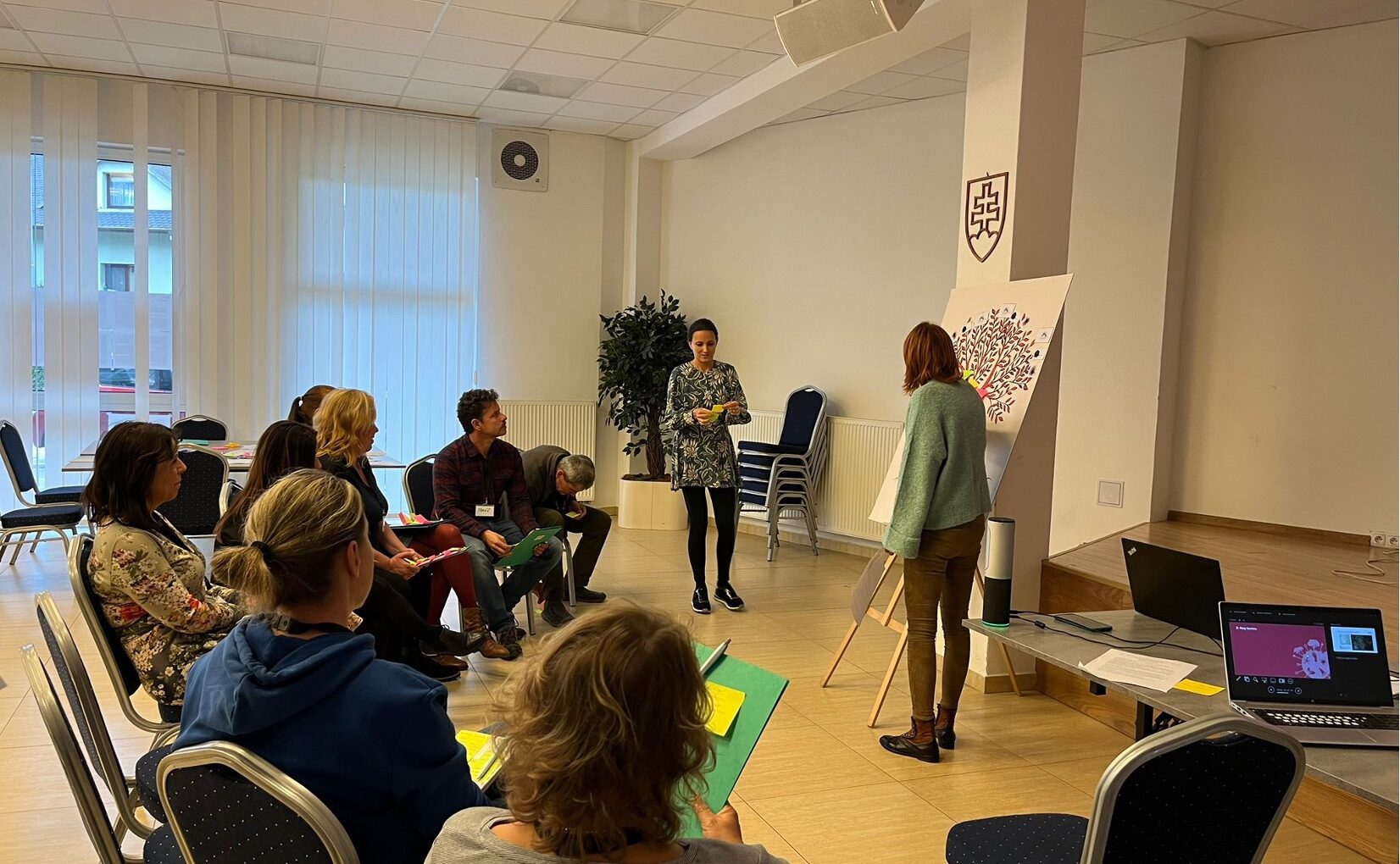
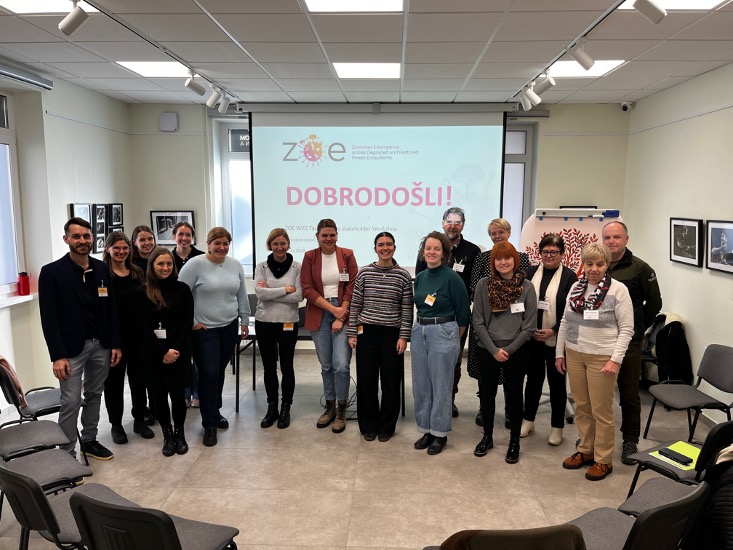
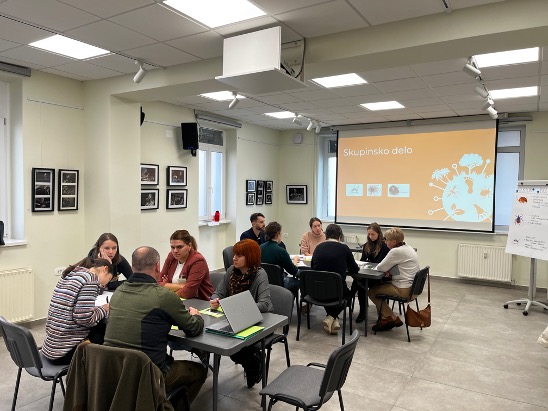
In the last months of 2025, we concluded the first fieldwork stage of ZOE’s Work Package 2 with two participatory workshops that brought together stakeholders from diverse institutional backgrounds. Following the workshops held in Latin America, we replicated the methodology in the European case studies of Slovakia and Slovenia. The aim was to explore the social, cultural, and behavioral factors linking environmental degradation, biodiversity loss, and the emergence of zoonotic diseases.
We are grateful to our colleagues from the Slovak Academy of Sciences, Dr. Boris Klempa, Dr. Jaroslava Panakova, and their teams; from the University of Ljubljana, Dr. Nataša Knap Gašper and her team, as well as psychologists Vita Jugovar and Pina Jakoš, for their support and dedication. We also acknowledge Charlotte Tienes, Julia Wesley, and Johannes Richter from the University of Vienna for assisting with on-site coordination and organization.
In Slovakia, research focuses on three communities surrounding Bratislava, representing distinct eco-types: Devínska Nová Ves, a deforested area; Marianka, with restored forest ecosystems; and Malé Leváre, a protected area with regenerating forest within the Záhorské Pomoravie Protected Bird Area. In Slovenia, the study takes place in the municipalities of Postojna and Pivka, in the Primorsko-Notranjska region—a predominantly forested karst landscape interspersed with pastures and hay meadows.
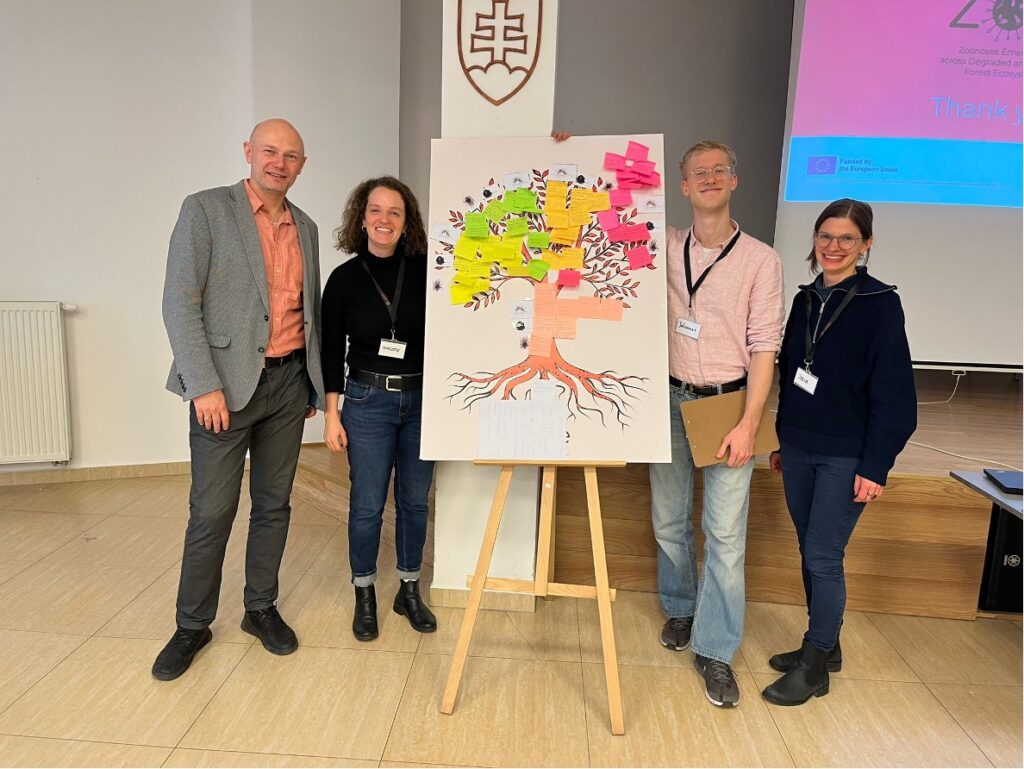
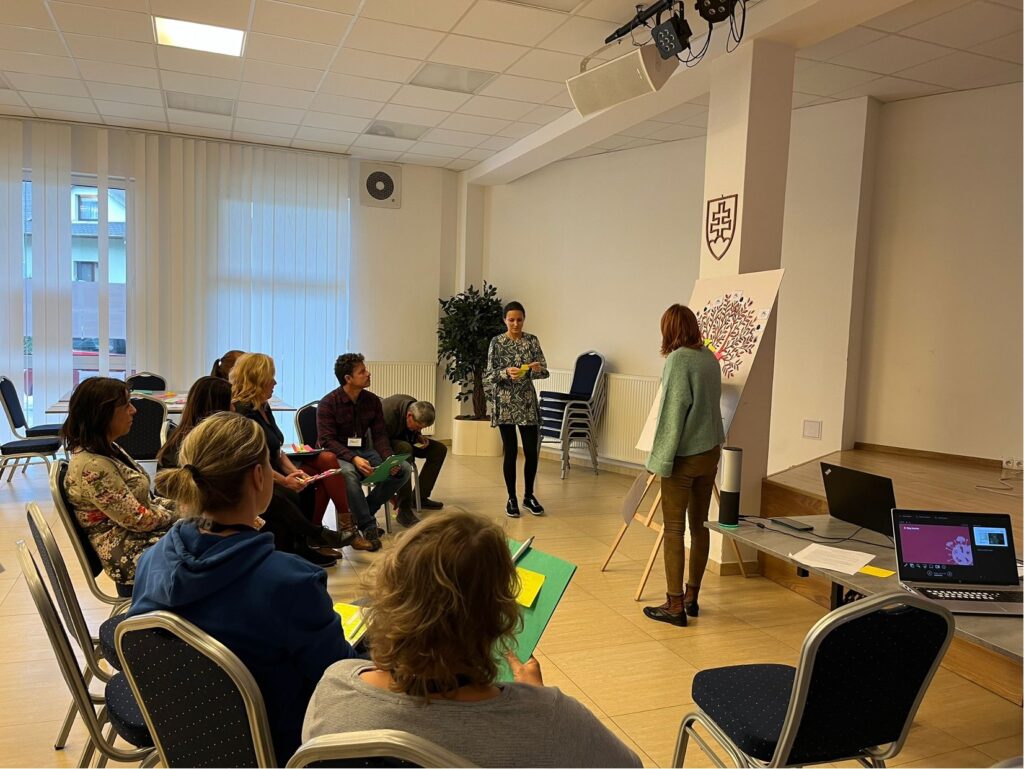
The workshops, held in the Houses of Culture of Marianka (Slovakia) in November 2025 and Postojna (Slovenia) in December 2025, brought together stakeholders from sanitary and veterinary institutions, environmental NGOs, community organizations related to hunting or forestry, and local and national government offices. Although more reduced in Slovakia than in Slovenia, their participation was essential to understanding local behaviors, customs, and beliefs linked to relationships with the surrounding environment and wildlife, as well as the structural living conditions and economic activities that shape land use and land cover.
Across both case studies, outdoor activities emerged as the main pathway for direct contact with vectors, like mushroom or herb picking, hunting or recreational walking among others. This kind of activities can bring them into close contact with rodents, ticks, and mosquitoes. Occupational risk groups include farmers, hunters, foresters, and scouts, who spend considerable time in outdoor environments. Children were also identified as particularly vulnerable due to their exploratory behavior and lower awareness of risks.
Cultural practices further influence exposure. Activities such as hunting dormice, home slaughtering, mountaineering, dog walking, or mushroom picking are common and often take place in vector habitats. In both case studies, reluctance to use chemical repellents and a preference for home remedies or natural protective measures were highlighted. This also includes fear or reluctance toward vaccination for some zoonotic diseases.
General access to sanitary services (for both humans and animals) was described as satisfactory, and public services were also reported as well managed by municipalities. However, different kinds of abandoned agricultural infrastructures were identified as risky sites for vector reproduction. Participants noted that food storage practices, an important factor for rodent attraction, have improved significantly, becoming an important vector control strategy.
Tick-borne diseases, such as borreliosis and tick-borne encephalitis, are relatively well known, especially among risk groups, with information circulating through social media. In contrast, rodent-borne diseases are not perceived as a major concern. Although people are generally aware that rabies or hantavirus exist, limited knowledge affects symptom recognition and may delay medical care. Mosquitoes are present year-round and widely considered a nuisance, but they are not commonly perceived as disease vectors, which influences control efforts.
Preventive practices reported in both countries include wearing protective clothing, installing mosquito nets at home, and using repellents. Participants also noted that people often adapt their behaviors to avoid mosquitoes, for example by changing the timing or location of outdoor activities.
Socio-environmental factors provide a broader context shaping these risks. Urbanization in forest areas was highlighted as one of the land-use and land-cover changes that affect not only human interaction with biodiversity but also forest degradation. Participants mentioned that degraded areas, often associated with extensive farming, experience outbreaks more frequently. At the same time, the artificial greening of urban areas was pointed out as creating habitats for the proliferation of zoonoses, facilitating species mixing, and the introduction of non-native species. The introduction of invasive mosquito species was strongly associated with disease emergence and climate change. Wildlife moving closer to human settlements further increases opportunities for contact.
Overall, the workshops in Slovakia and Slovenia show how behaviors, cultural practices, structural conditions, and environmental contexts intersect to shape zoonotic disease risk. Identifying both shared patterns and local specificities will guide the next stage of ZOE’s research, informing tailored surveys and observation protocols to better understand human-environment interactions and support interventions that integrate biodiversity conservation with public health.
We would like to sincerely thank all workshop participants for sharing their knowledge and experiences, as well as all colleagues and partners who contributed to the preparation, coordination, and successful implementation of these activities. Their engagement is essential to advancing interdisciplinary research within the ZOE project.